
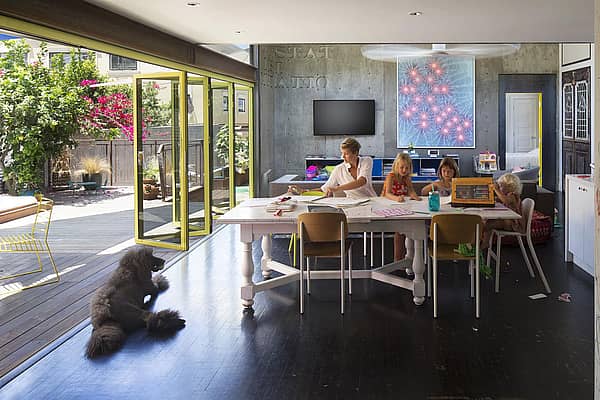
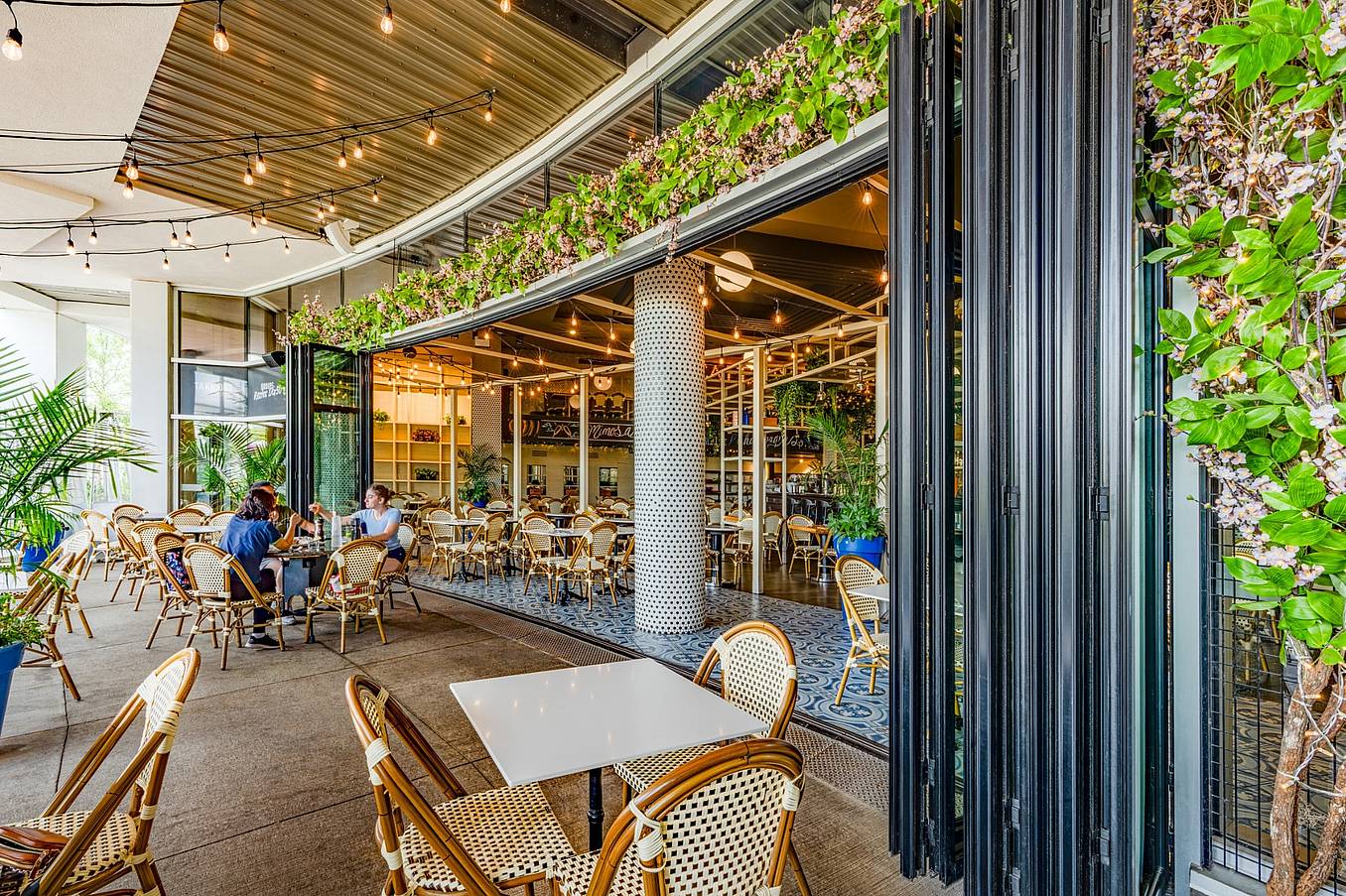
Quartier DIX30, a large mixed-use lifestyle district in Montréal’s South Shore, was planned as an open-air alternative to the enclosed mall. It was designed to function like a walkable downtown with restaurants, entertainment, and retail stitched into a streetscape. Here, operable glass doors sharpen restaurant frontages into flexible thresholds, connecting dining rooms to terraces and sidewalk energy while preserving enclosure and comfort when the weather turns.
Here, restaurant design effortlessly manages rhythm: pre-show rushes, patio season spikes, sudden weather shifts, and the constant pull between an energetic streetscape and a controlled interior dining room. Read on to learn more about how NanaWall systems have become essential in elevating restaurant spaces.
The Benefits of Operable Glass Doors in Restaurant Design
Opening Glass Walls Improve Customer Satisfaction & ROI
For restaurants, the importance of having open-air and outdoor seating increases, as it translates into improved customer satisfaction, ratings, word-of-mouth recommendations, and returning customers, all benefits that increase daily revenue. Quartier DIX30 sits at a well-trafficked junction in Brossard, Quebec. The district is popular for its dining, hotels, cinemas, and event venues, all stitched together through pedestrian-focused streets and green public spaces. For architects and developers, the standard of excellence for restaurant frontage is higher in a district like this.
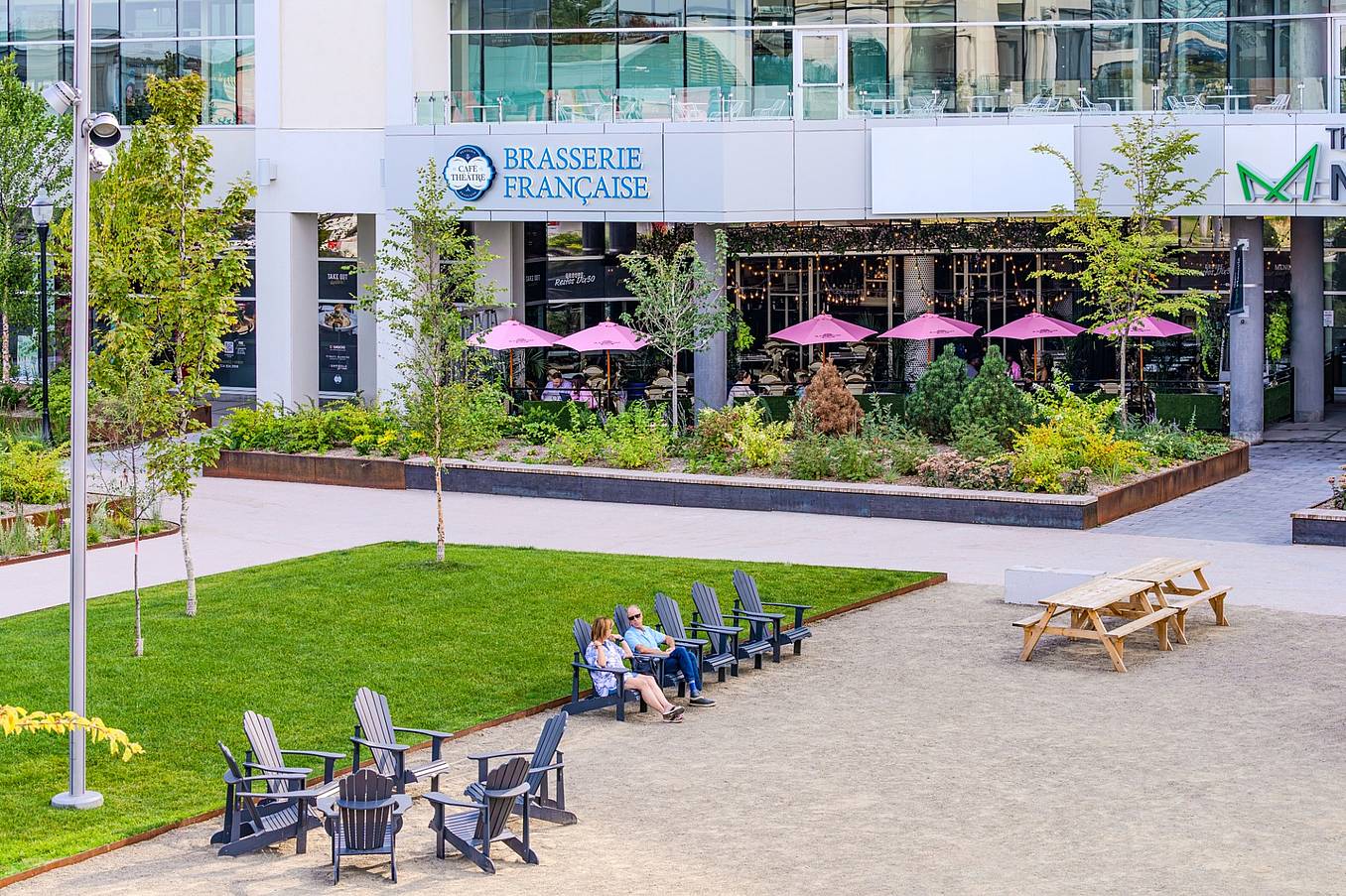
Large Opening Glass Walls Unite the Entire Shopping District
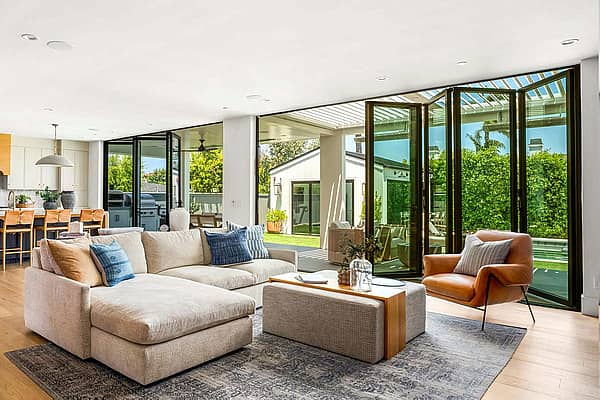
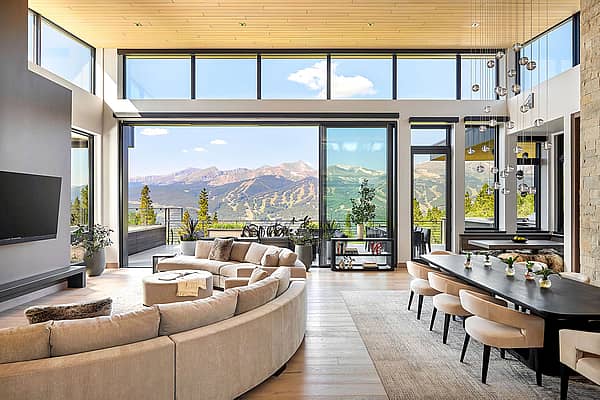
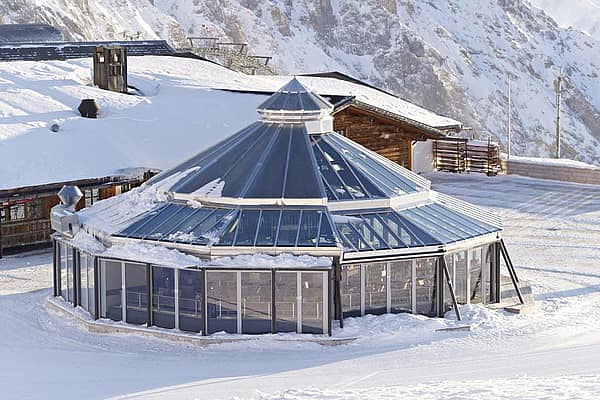
What ties these top restaurants together is a shared approach to indoor-outdoor design. Across this culinary cluster at Quartier, NanaWall opening glass systems were used as an architectural tool to tune how each dining space meets the terrace, the sidewalk, and the energy of the district. Some concepts rely on full-height opening glass doors to erase the boundary between the dining room and the covered terrace. Others use folding glass windows to create targeted openings at bar and lounge edges, bringing air, light, and visibility into the room without sacrificing enclosure.
Unlimited Possibilities for Restaurant Design: Dissolving Boundaries
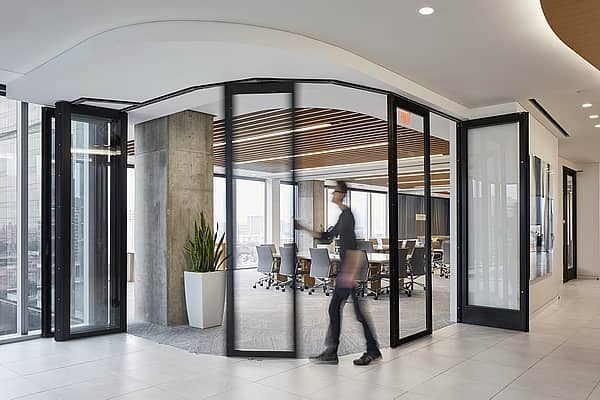
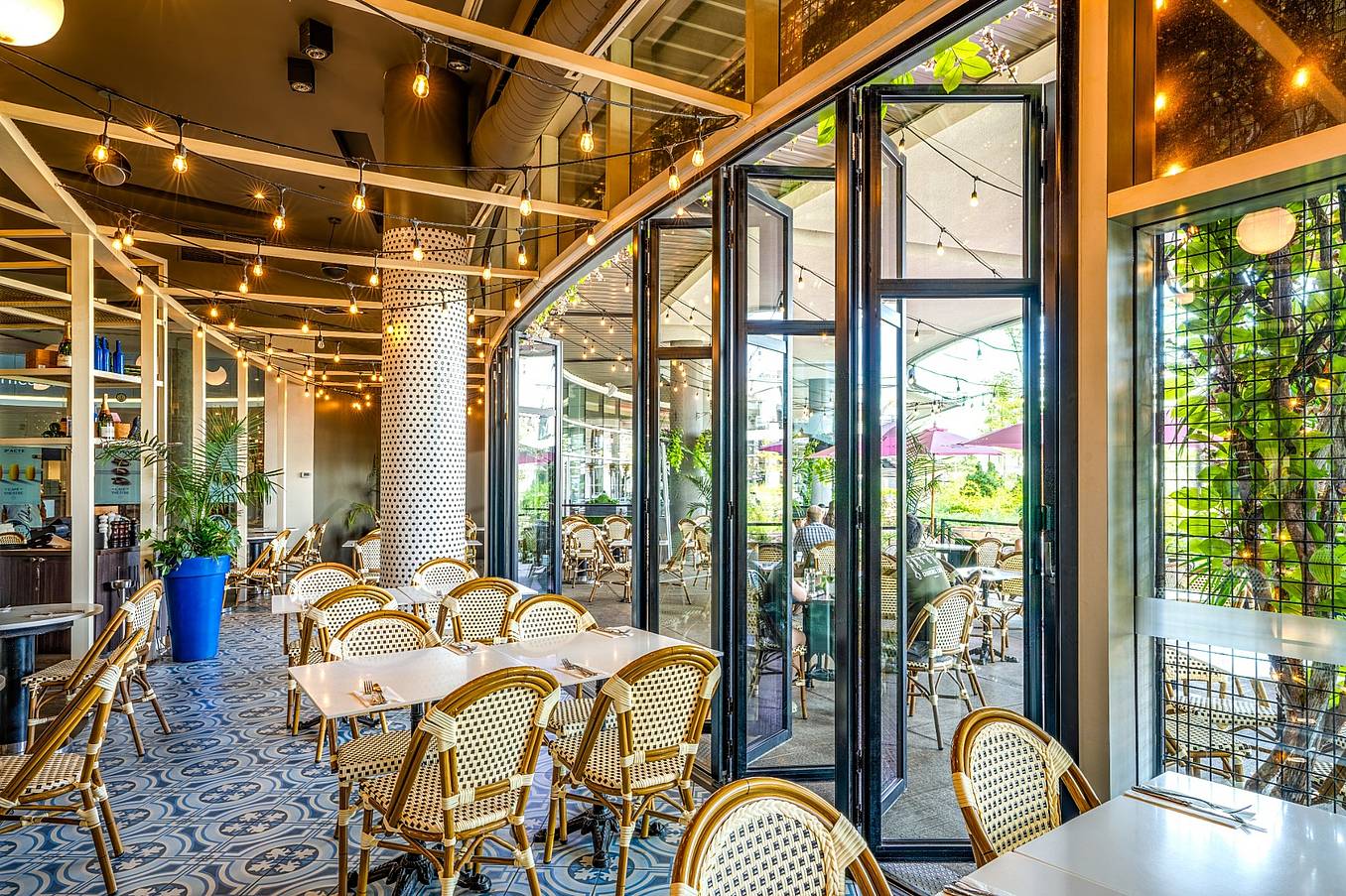
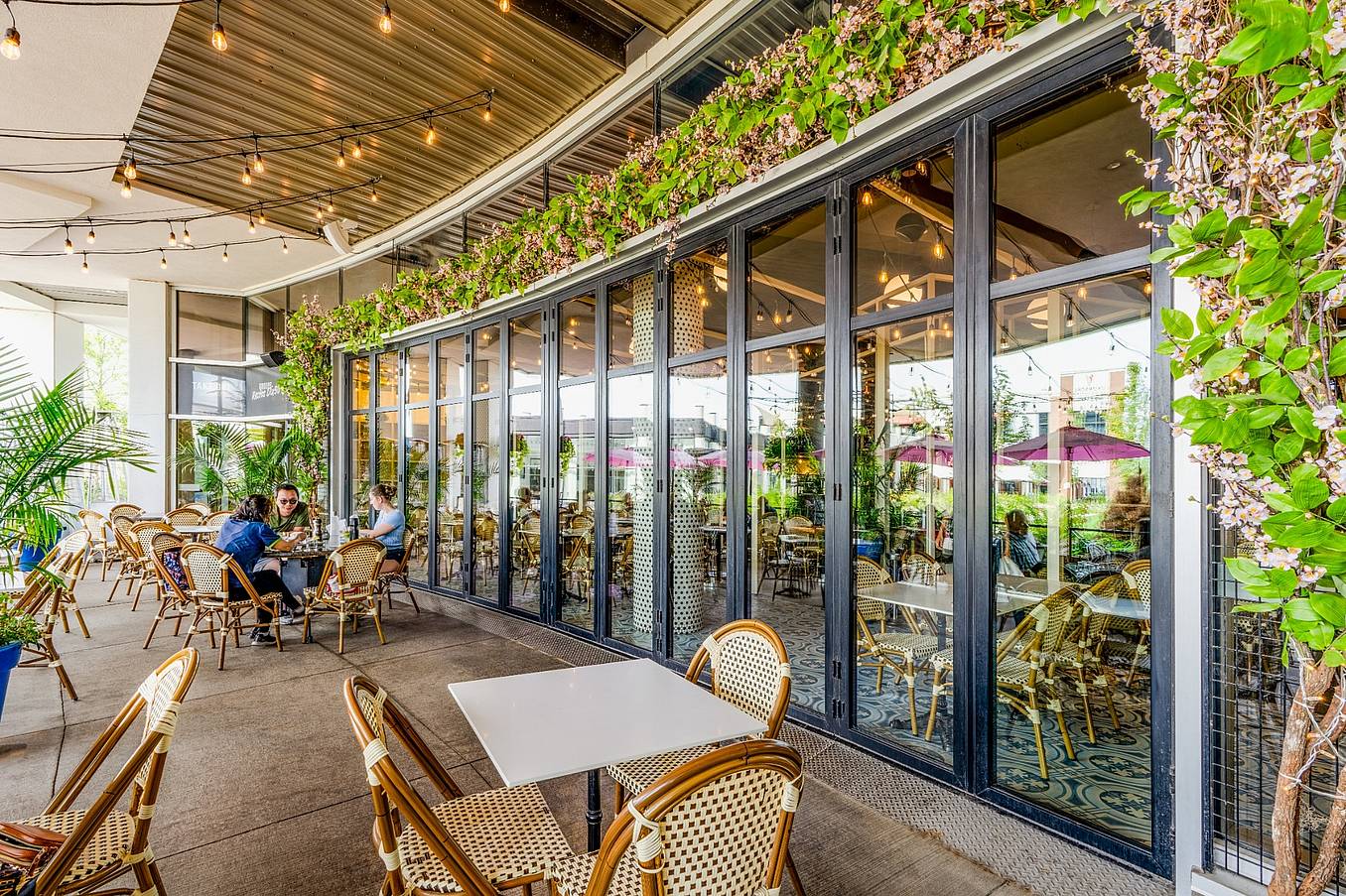
The family of indoor-outdoor restaurants and local eateries is all calibrated to the personality of each venue. Among them is Café du Théâtre, designed with operable glass doors along a curved perimeter. This allows the dining edge to shift from enclosed to open-air while still reading as one continuous space. These SL70 systems offer unlimited design possibilities for restaurants, including unique facades, segmented curves, tall panels, and even open corners.
Nearby, L’Aurochs and La Tomate Blanche restaurants use tall folding glass wall systems to open key zones to the outdoors, supporting service, ventilation, and guest comfort while preserving the interiors year-round.
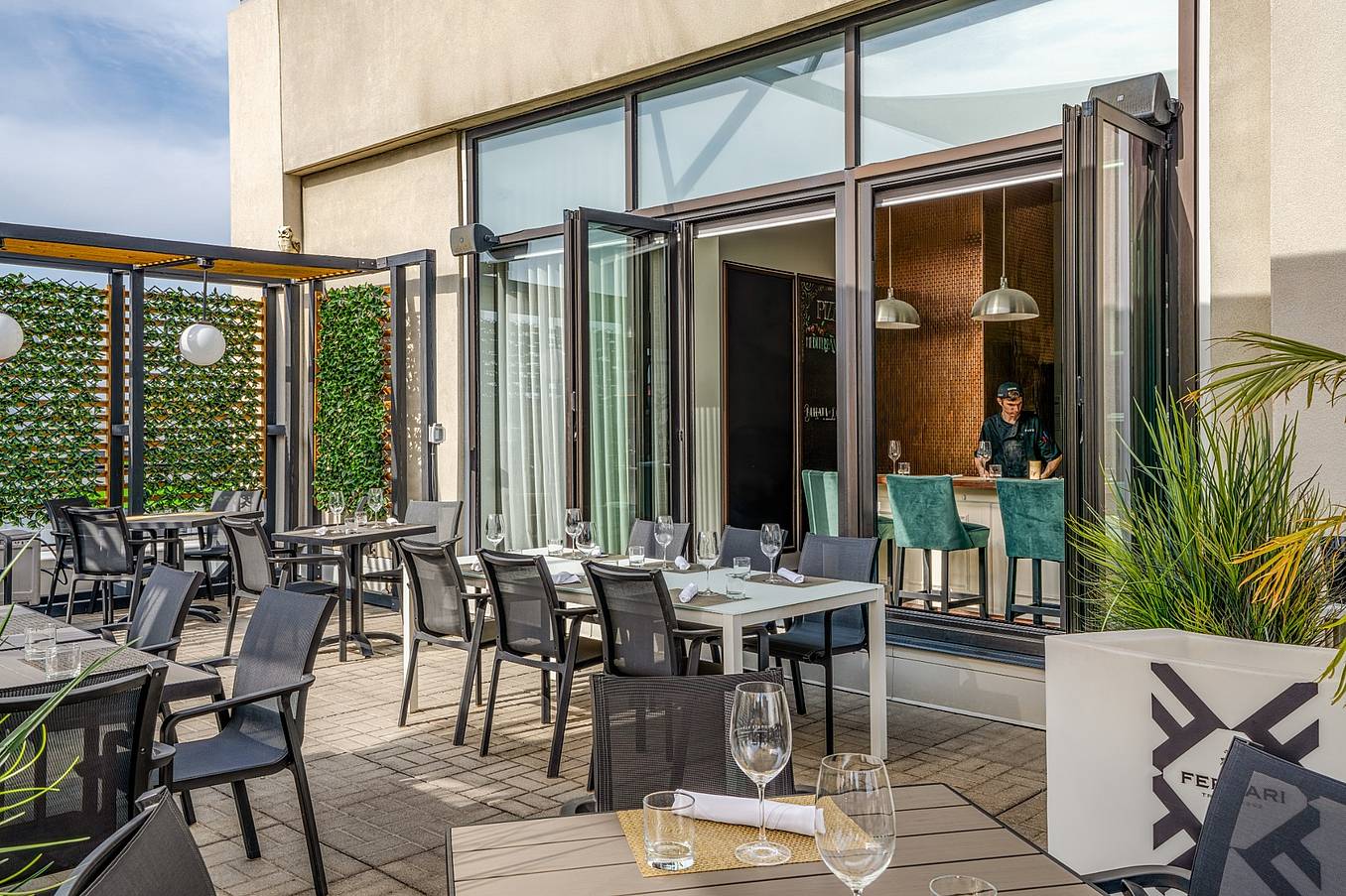
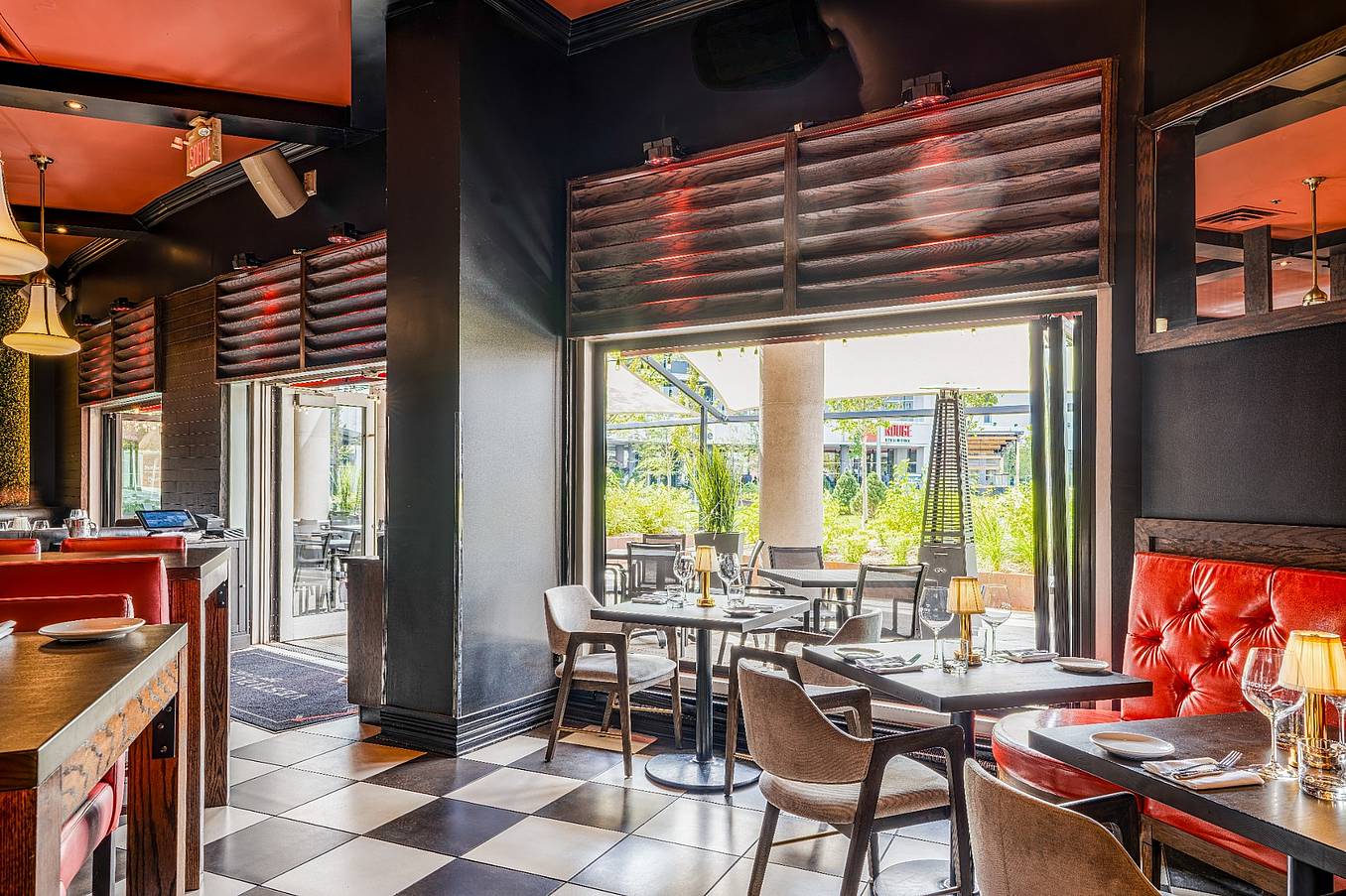
The chic Le Vestibule lounge space also uses SL60 operable windows to create a stylish indoor-outdoor bar. Whether the restaurant design has a full-height wall of doors or a bar-height run of windows, the intent is the same: a dining district that can effortlessly operate through seasonal shifts, peak hours, and day-to-night transitions.
Designing for Dining: What Architects & Restaurant Owners Should Consider
Glass Walls Increase Seating & Flexibility Without Layout Redesign
More usable edge space means more tables, more dwell time, and more repeat visits, especially when the space feels comfortable, open, and social. In a high-traffic lifestyle center, a restaurant’s ability to scale seating and maintain atmosphere is directly tied to ROI. A fully flexible restaurant frontage with operable glass doors creates additional seating and tables, expands usable square footage, extends dining space year-round, signals vitality, and invites passersby shoppers. In cold climate regions like Quebec, business during the shoulder season is a crucial consideration.
Design Environments for Customer Comfort, Wellness & Fresh Air
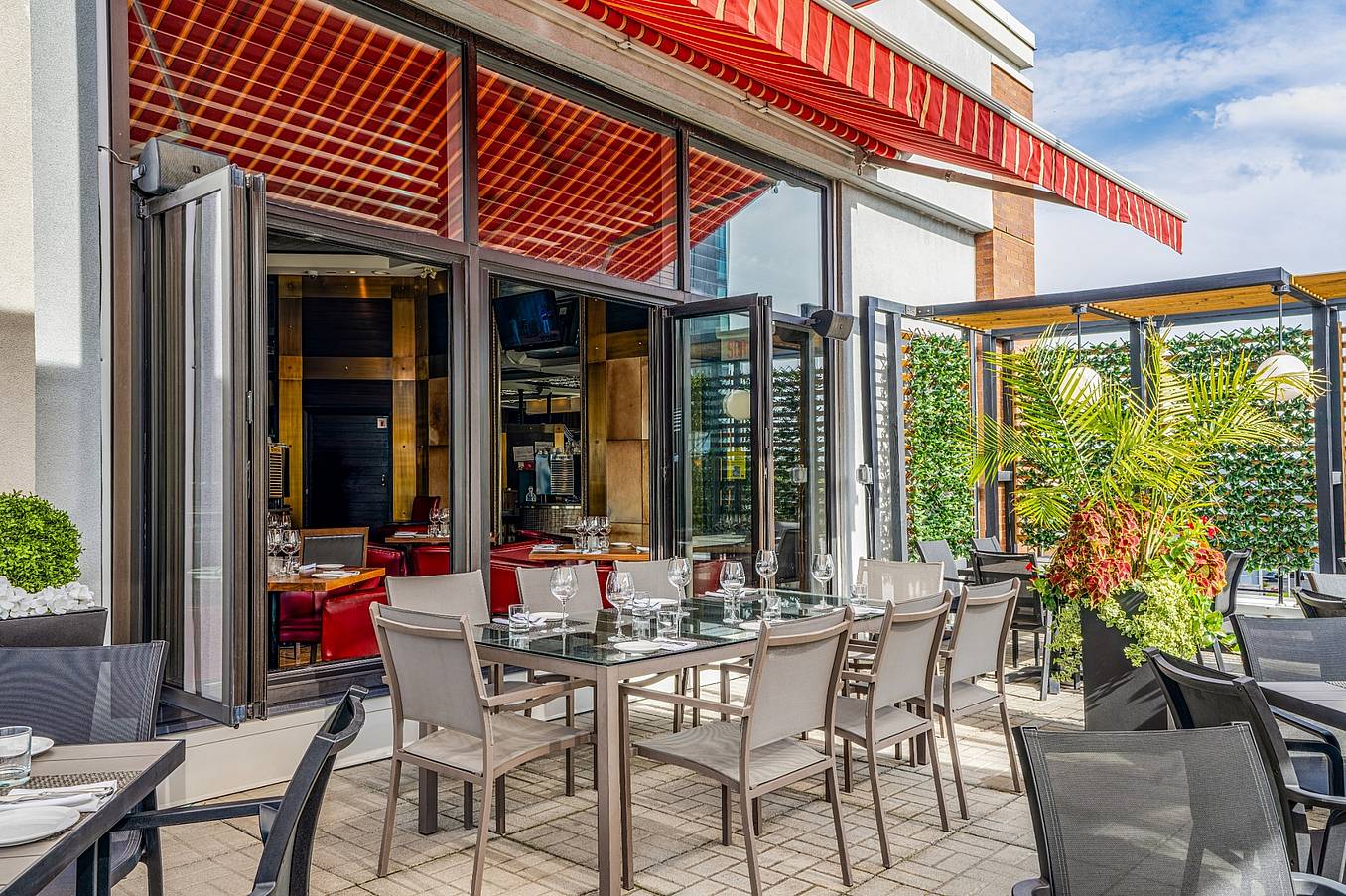
People are drawn to daylight, airflow, and the sense of connection to the outdoors, even in dense restaurant and commercial settings. Dining alfresco offers an immersive experience with the natural environment that cannot be replicated indoors. When open, opening glass doors create natural ventilation, altering how a room feels, especially during peak hours. Even when closed, large transparent panels keep interiors cozy and maintain views to the outdoors. Whether open or closed, these systems harness the health benefits of sunlight and year-round ventilation for restaurants.
Durable Glass Doors That Stand Up to the Daily Commercial Grind
To architects and builders, operable glass doors are essential solutions for restaurant operations, code compliance, and hospitality flow. Restaurant hardware must perform 365 days a year. Operable glass doors are durable, easy to operate, and designed to perform reliably. NanaWall systems are engineered and tested for durability, including cycle testing that exceeds 20,000 open-and-close cycles across product lines. For architects and developers, that means fewer operational headaches, fewer workarounds, and happy clients.
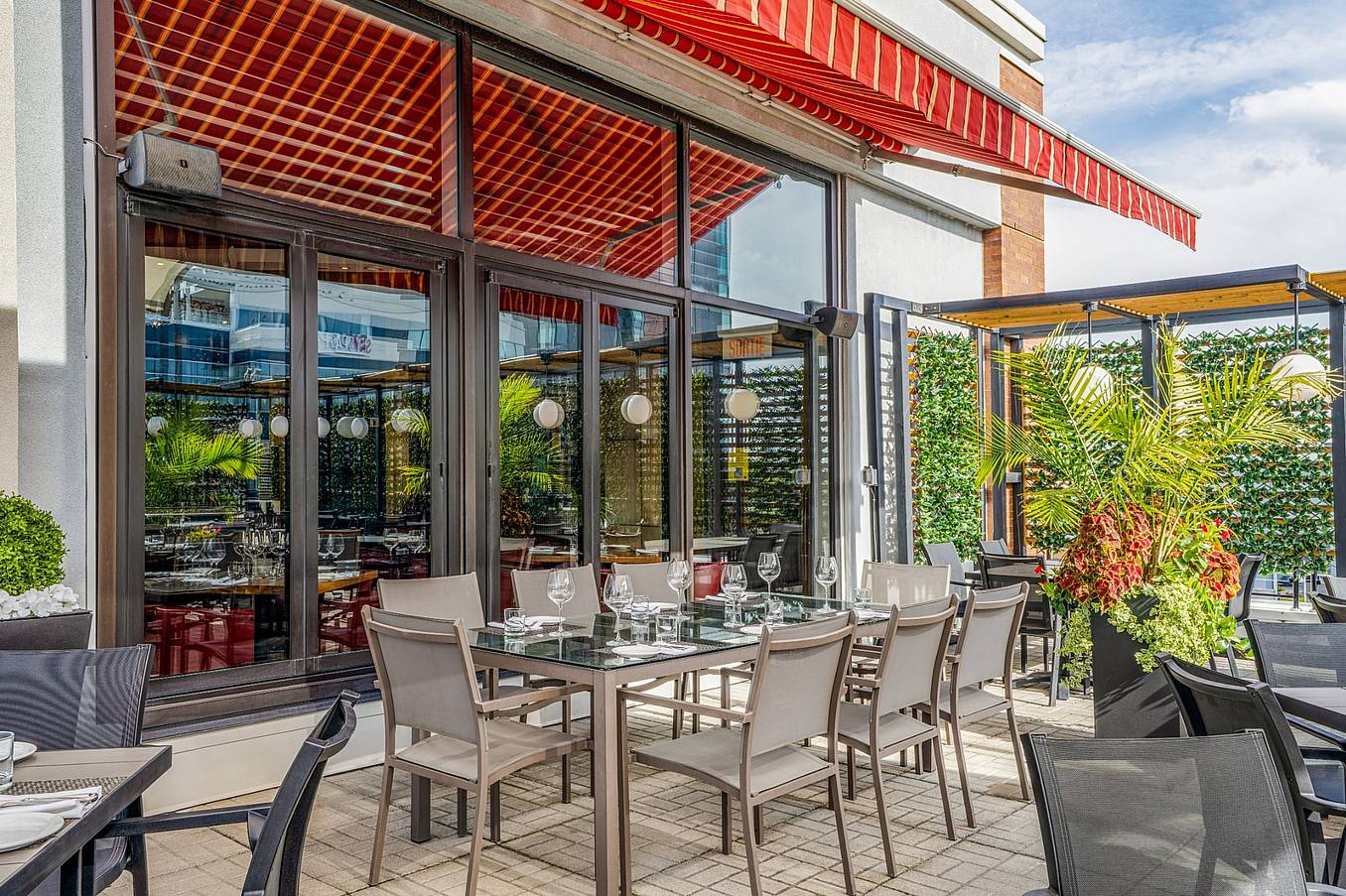
Weather Performance Keeping Customers Comfortable, Year-Round
Operable glass doors help maintain comfortable indoor temperatures year-round, so customers can even be seated right up against the glass. Even when systems are closed, patrons still benefit from the feeling of connecting with the outdoors while dining, even during the coldest months. Restaurants rely on these highly durable, weather-performing glass doors and windows for demanding commercial environments and high-rise applications. Regardless of the weather, restaurant designs with fully open exteriors help convert foot traffic and create a place where patrons want to linger.
These systems have been independently tested for air, water, operation, structural integrity, forced entry, and sound control, with excellent results, ensuring durability and performance when needed most. Systems are fully customizable and can be specified with double or triple glazing.
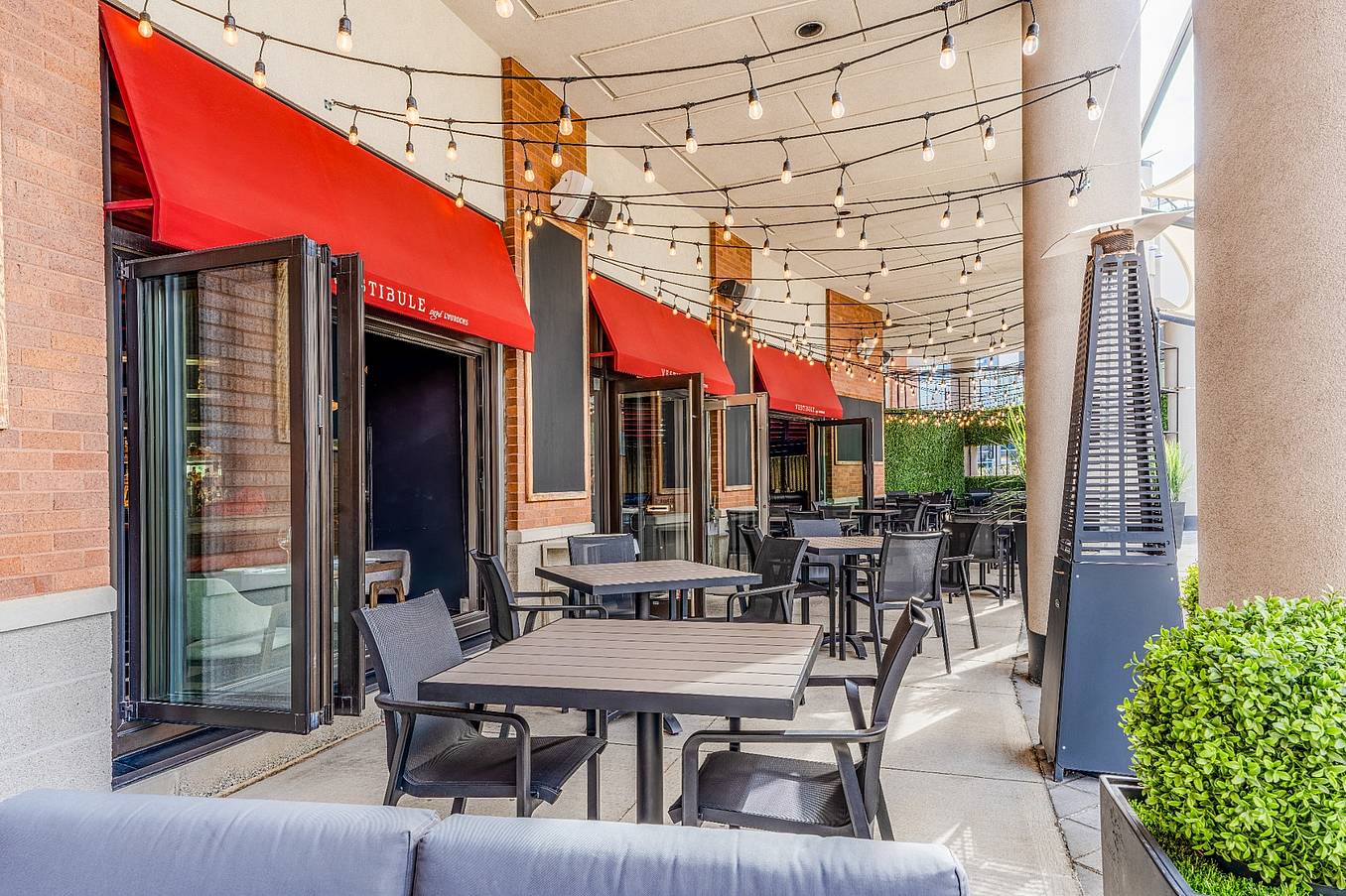
Opening Glass Walls Increase ROI, Seating, & Customer Satisfaction
For restaurants, having an outdoor seating area translates into increased customer satisfaction, ratings, word-of-mouth recommendations, and returning customers, all of which benefit overall ROI. Imagine how many more tables one could fit by extending usable square footage to the outdoors with a simple restaurant design solution like operable glass doors! Having open-air, indoor-outdoor seating options for patrons can differentiate a restaurant from its competition while increasing customer satisfaction. When patrons feel comfortable and relaxed, they are more likely to extend their visit, order more food and drinks, and recommend them to others, making each table more profitable.
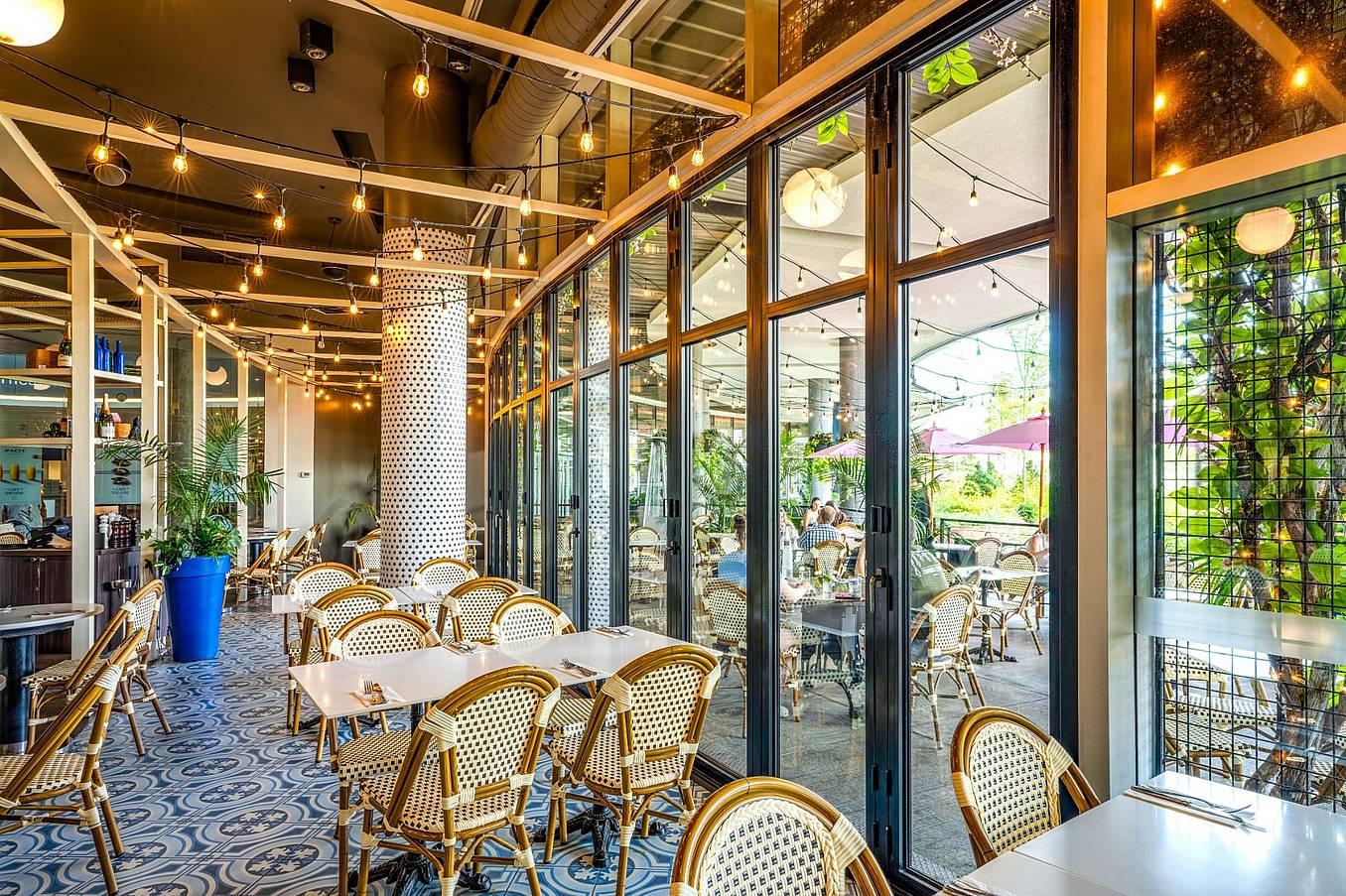
Final Thoughts
Are you ready to take your restaurant design and outdoor dining experience to a whole new level? Consider the durability, versatility, and highly functional benefits of moveable glass wall systems to create an alluring alfresco dining experience and ensure customer satisfaction. These systems help transform commercial spaces to immediately benefit from natural light, fresh air ventilation, versatility, and attractive dining environments. Having easily accessible outdoor dining options will help restaurants stand out from the competition, ensure customer satisfaction, and help increase annual revenue!
Discover how other restaurants are leveraging NanaWall operable glass doors in our inspiration gallery!
