

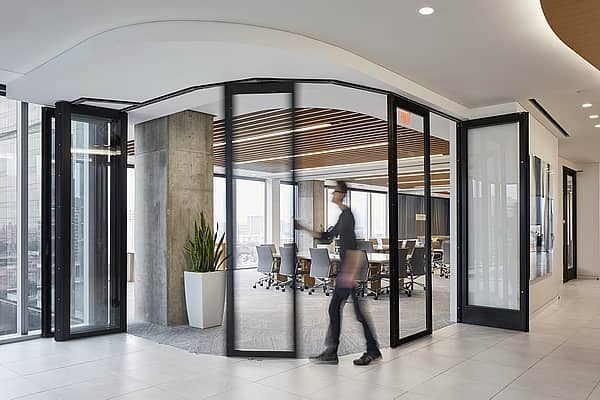

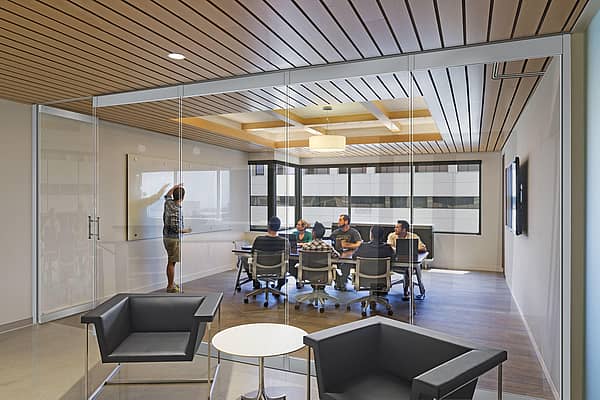
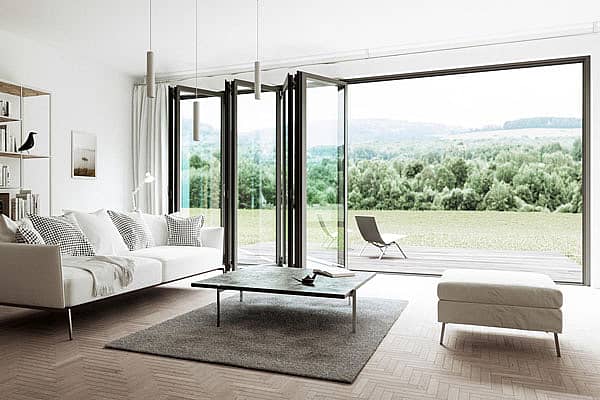
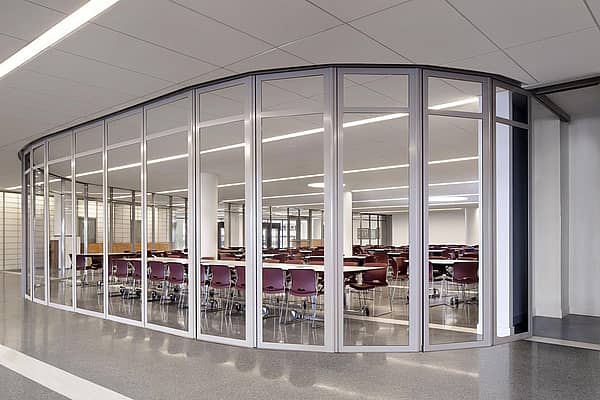
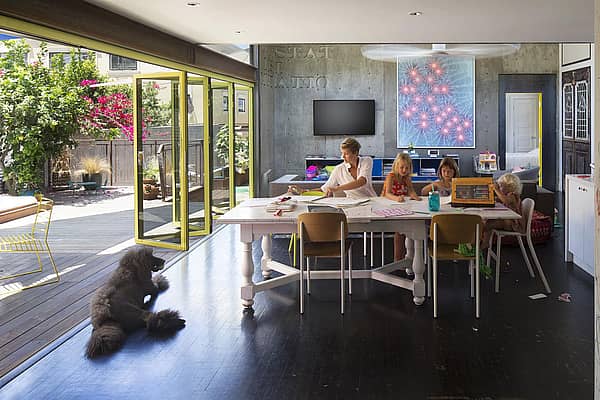
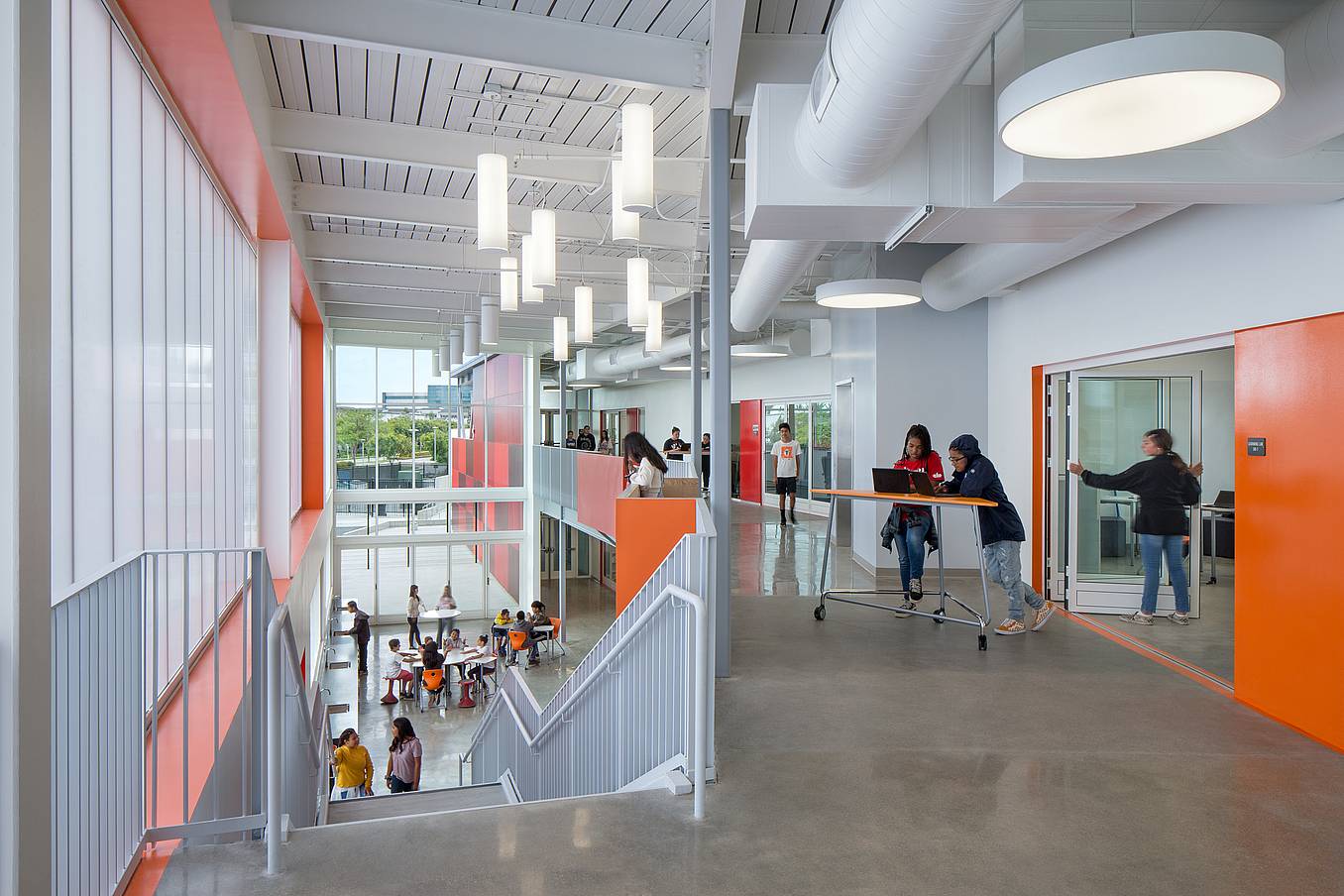
The modern classroom is no longer limited to four walls. Across today’s schools, learning has expanded into shared hubs, wide corridors, gathering areas, and now, even staircases. These once transitional spaces are now being intentionally designed to support collaboration, independent study, and everyday student interaction. As more of the school structure becomes usable learning space, architects and designers are also reconsidering how these areas connect. Retractable glass walls let classrooms extend beyond the boundary of a traditional wall while providing transparency and acoustic separation when closed.
The New Academic Spaces: Learning Stairs, Student Hubs, and Retractable Glass Walls
The Latest Evolution in School Design
As new generations of learners begin their academic journey, school design continues to evolve to meet ever-changing demands. One thing is certain: conventional, single-room classrooms are out. Today, learning happens everywhere, from libraries and student commons to hallways and even stairways.
A key to ensuring a dynamic learning campus is applying flexible design solutions, like retractable glass walls that enable interchangeable layouts as needs change throughout the day. This approach has also changed how architects think about circulation space. Rather than designing hallways and staircases solely as transitional spaces, these areas are increasingly becoming extensions of the classroom.
Let’s explore more of these flexible learning environments below, and how NanaWall systems help maximize their potential with adaptable space division.
What Are Learning Stairs?
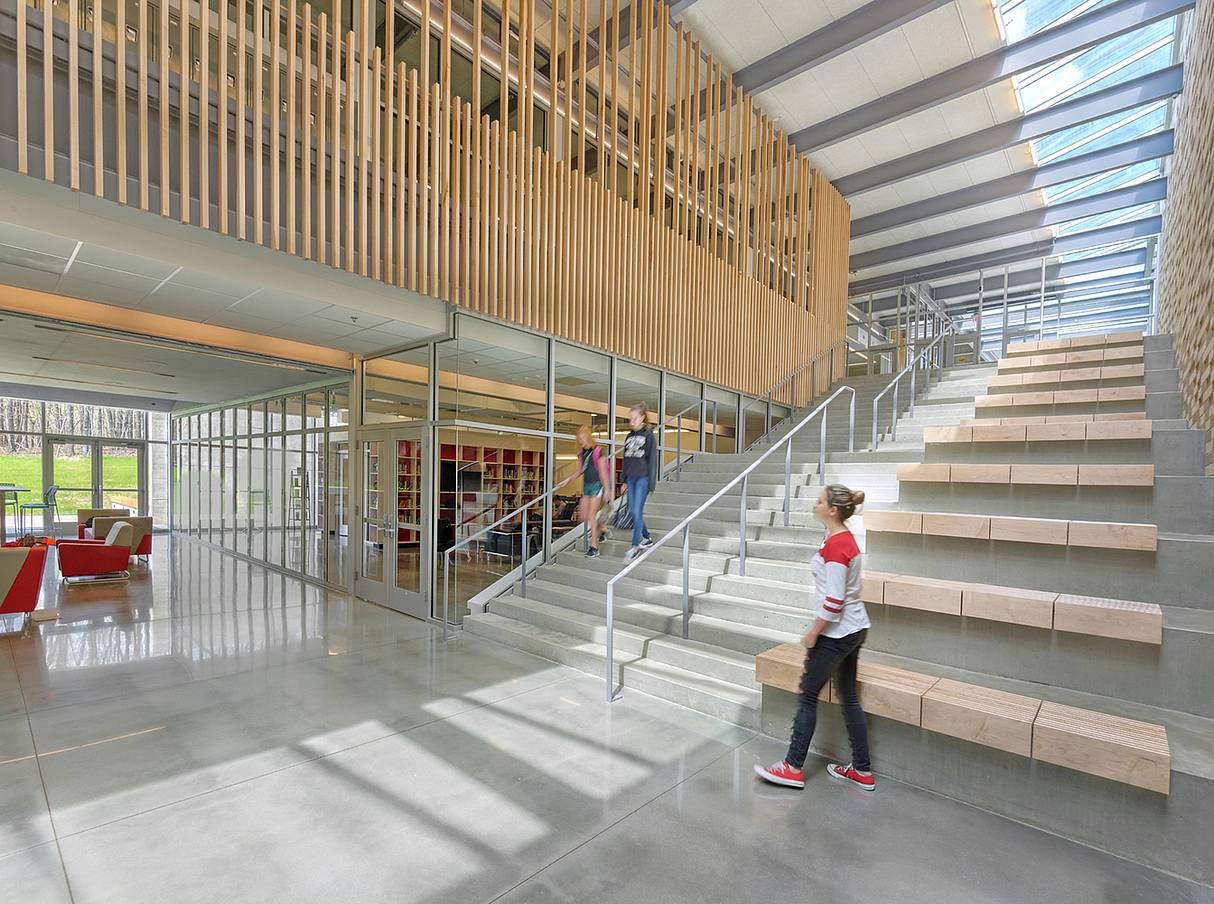
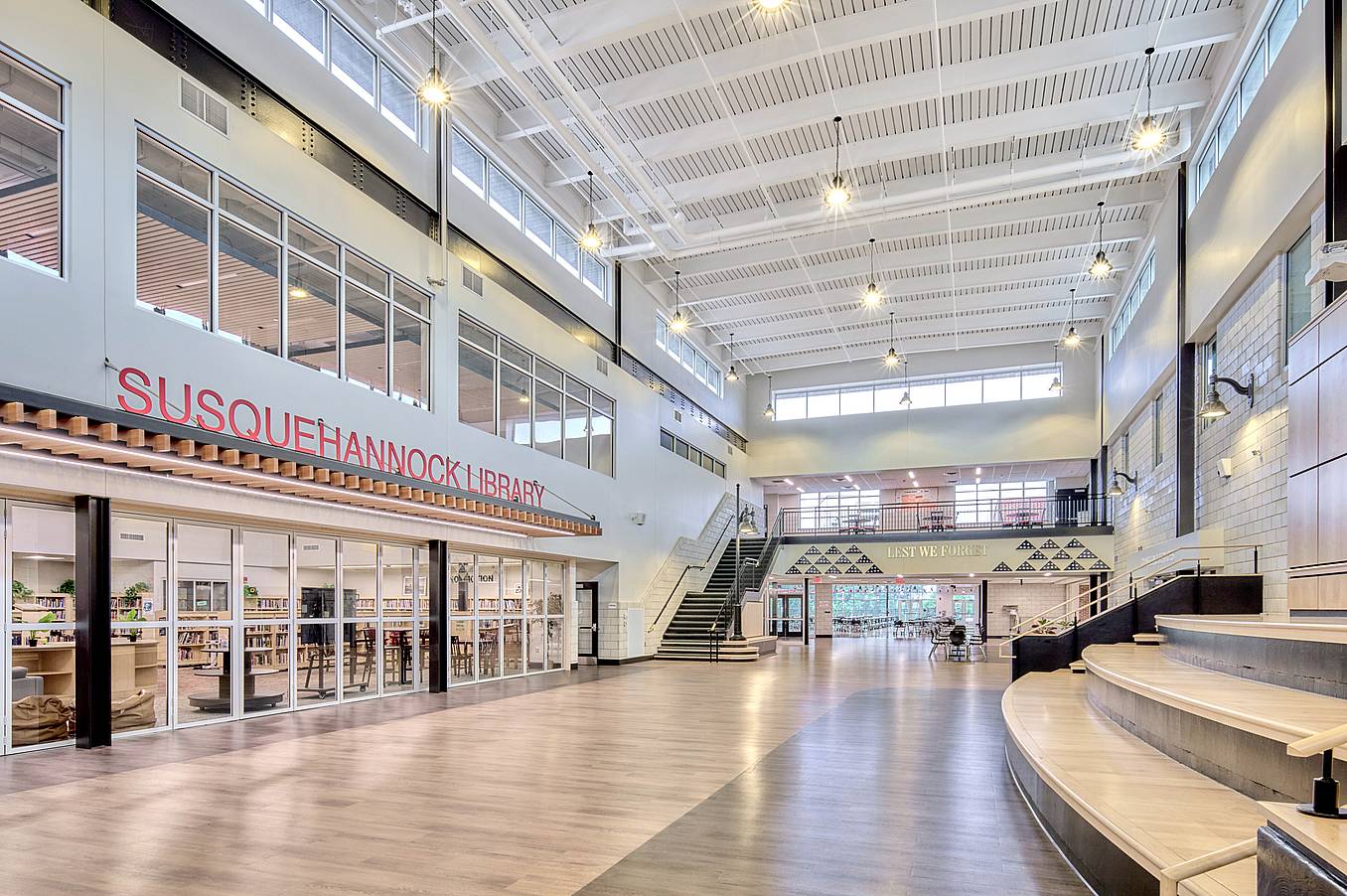
Learning stairs combine circulation, seating, and gathering space within one architectural feature. Often designed with wide, tiered platforms, they offer students a place to gather for collaborative assignments, independent work, or simply spend time between classes. Their location can also make them a functional extension of surrounding areas like libraries, classrooms, cafeterias, and auditoriums, adding usable space.
Retractable glass walls can further support this versatility. An adjacent space can remain enclosed for everyday use, then open directly to the learning stairs for additional learning space. All while supporting transparency and acoustic control.
What Are Learning Hubs?
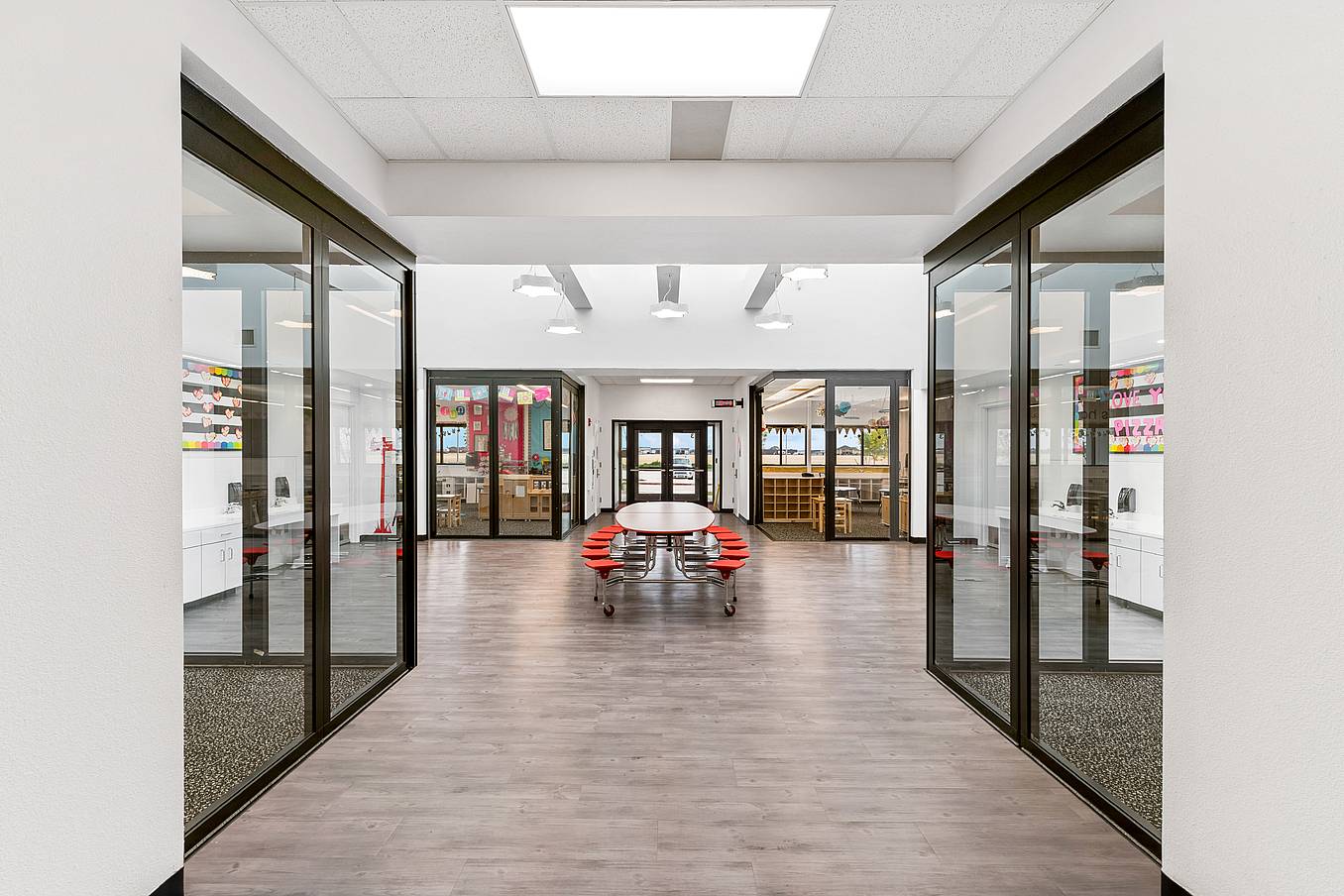
A learning hub is often a grouping of classrooms around a central area where kids work together, and teachers exchange resources. These collaborative areas provide learners with places to work outside the conventional classroom without removing them from the academic environment.
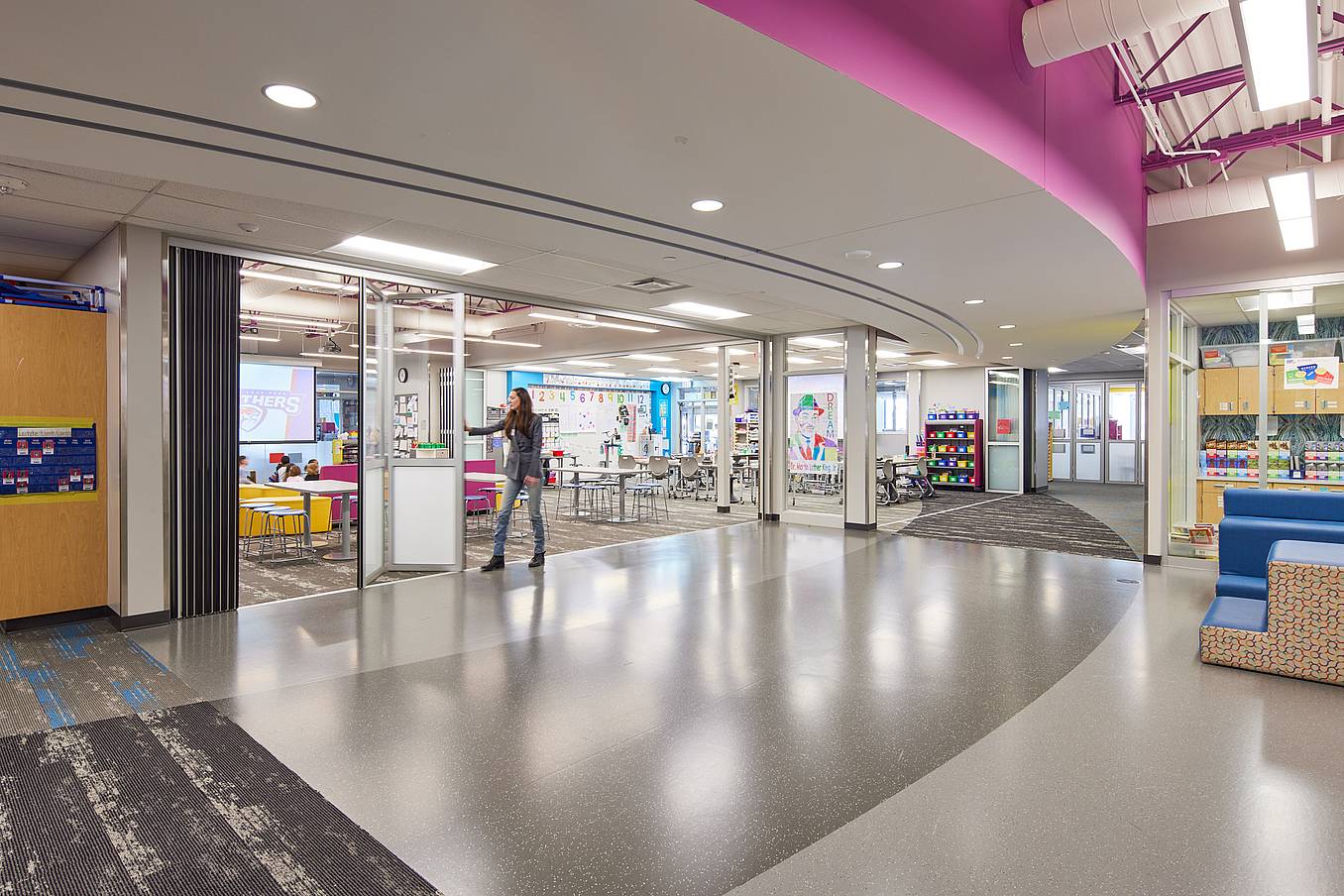
With retractable glass walls, like those at Lubbock Cooper Elementary above, designed by Parkhill, Smith and Cooper (PSC) architects, adjacent classrooms connect seamlessly to these spaces, allowing one, two, or more activities to occur at once within the same footprint. When all systems are open, classrooms connect to one unified area for group lessons, collaboration, or socializing.
How Hallways Have Become Classroom Extensions
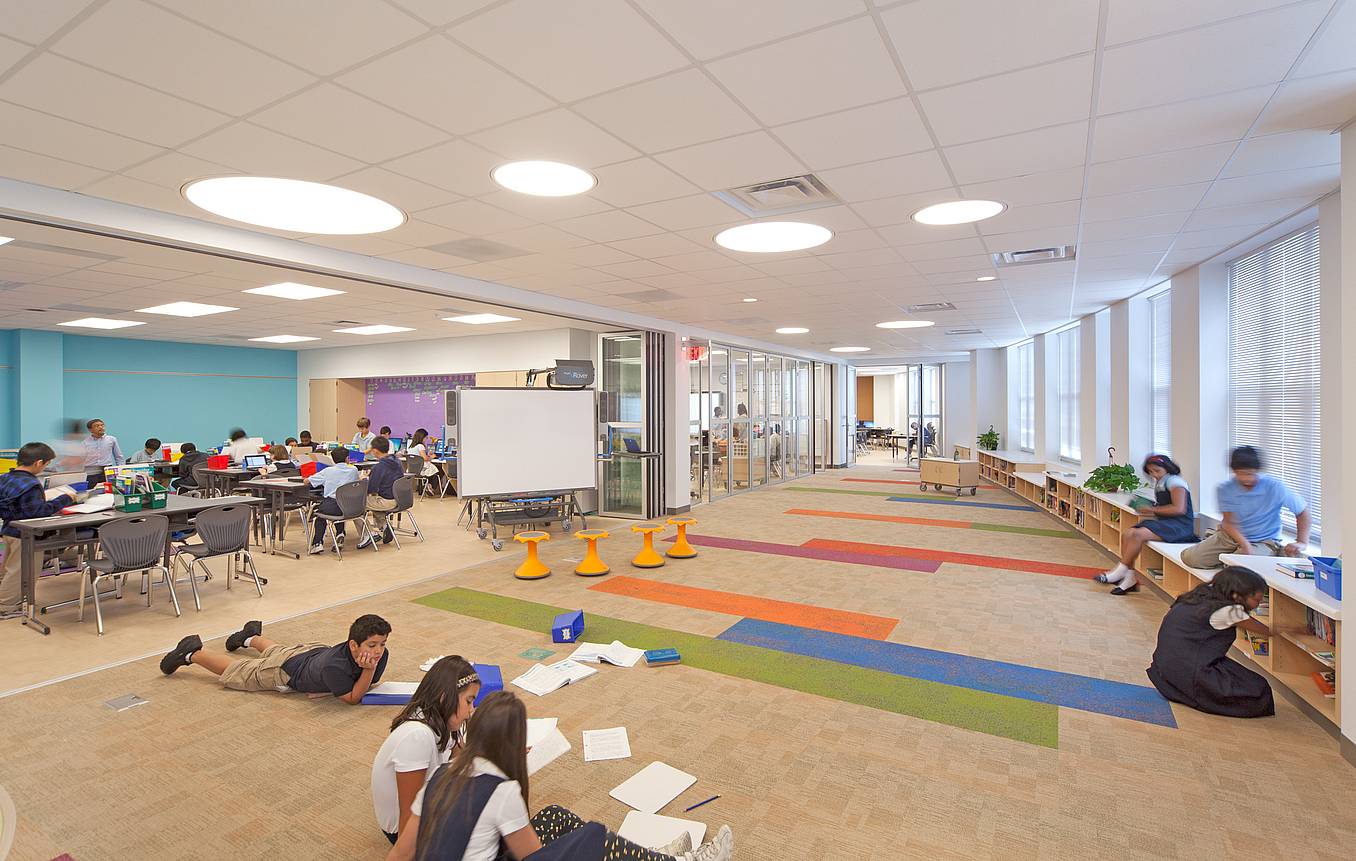
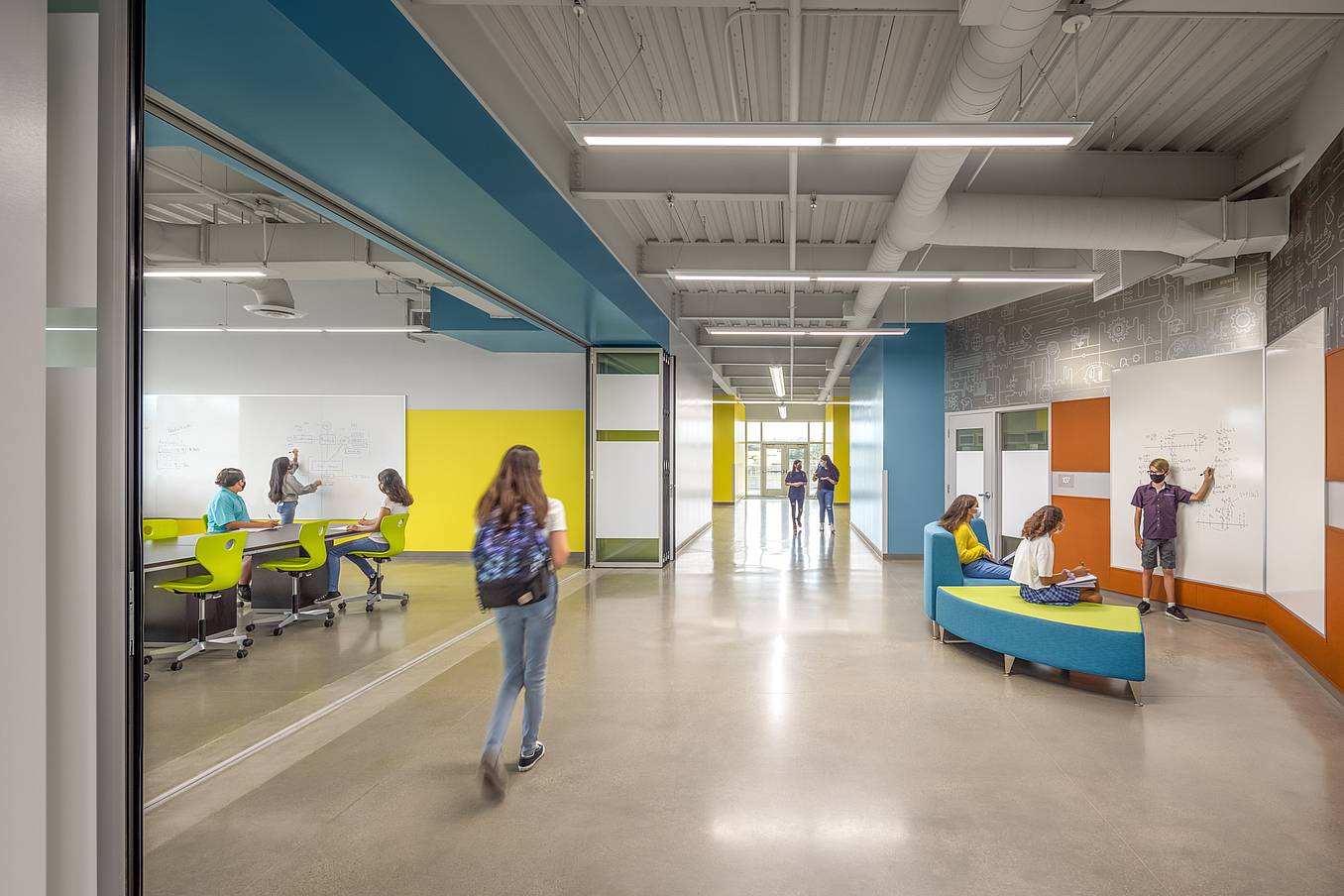
Hallways are another transitional space taking on a larger role in modern school design. Wider corridors with integrated seating, tables, and breakout areas can give students additional places to collaborate, study independently, or continue lessons outside the classroom.
Retractable glass walls help strengthen that connection by allowing adjacent classrooms to open directly into these shared areas. Teachers can expand beyond the limits of a single room for group activities or hands-on activities, then close the system when separation is needed. Even when closed, transparent glass maintains visibility and natural light, allowing instructors to always keep an eye on students.
The Benefit of Retractable Glass Walls in School Design
As learning expands beyond the classroom, retractable glass walls give schools the flexibility to use available space more effectively. Large openings can connect classrooms with learning hubs, hallways, and other shared areas, then quickly divide them when activities require greater separation.
With the panels closed, transparent glass preserves natural light and visibility while helping control sound between adjacent spaces. NanaWall opening glass walls offer acoustical solutions with systems ranging from unit STC 32 to STC 45, depending on the system. When open, easy-to-operate panels glide out of the way into minimal stacks, allowing students and educators to move freely between connected learning environments.
Why NanaWall?
NanaWall retractable glass walls are increasingly used in modern school design to create wide, accessible openings. Beyond the flexibility and transparency these products provide, these systems offer a reliable, durable solution backed by 3rd-party independent testing, including air, water, structural, forced entry, and sound control, with excellent results. In addition, these systems are engineered to open with a single push of a finger, allowing teachers and students to operate the panels easily as needs change.
Acoustical attenuation, as low as unit STC 45, minimizes distractions and encourages productivity alongside abundant light and fresh air ventilation when used in exterior applications. Plus, ADA-compliant sills, higher kickplates, panic hardware by others, and convenient swing doors promote safety and accessibility for all learners. Plus, diverse customizations like hardware options and over 200 powder coating colors allow these doors to complement any school branding and aesthetic.
Final Thoughts
As learning moves beyond the conventional classroom and school design adapts to new ways of learning, every part of the school can support the academic experience. Learning stairs, student hubs, and reimagined hallways show how spaces once dedicated to a single purpose can become valuable places for collaboration, instruction, and everyday interaction. With NanaWall retractable glass walls, these environments can stay adaptable, giving schools the flexibility to connect, divide, and reconfigure spaces as education needs evolve over time.
Discover how modern schools are redefining learning spaces with NanaWall movable glass walls on our Education Applications page!
